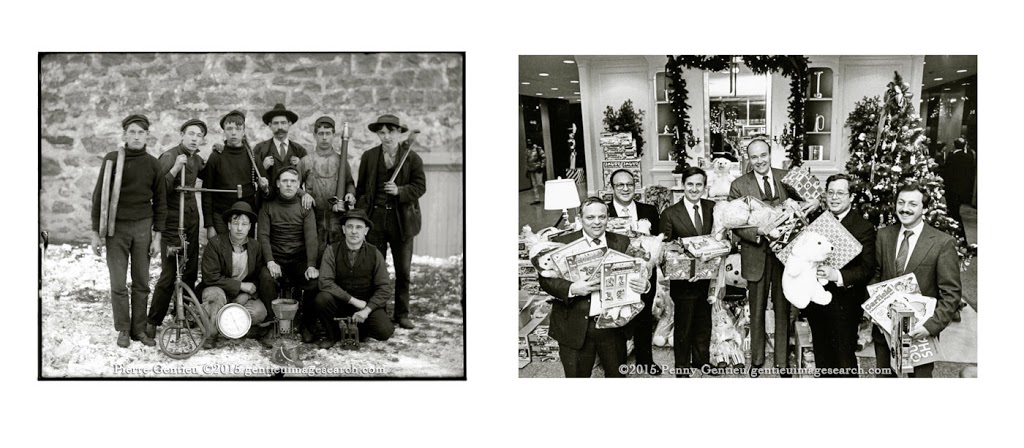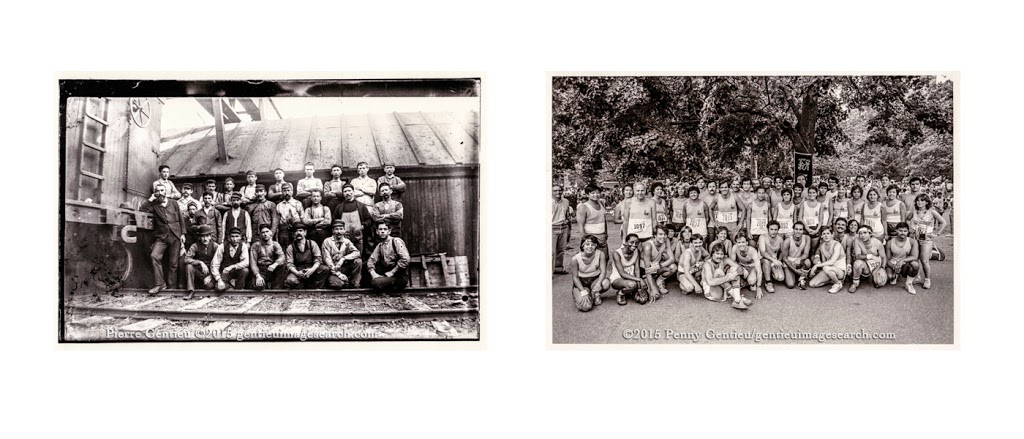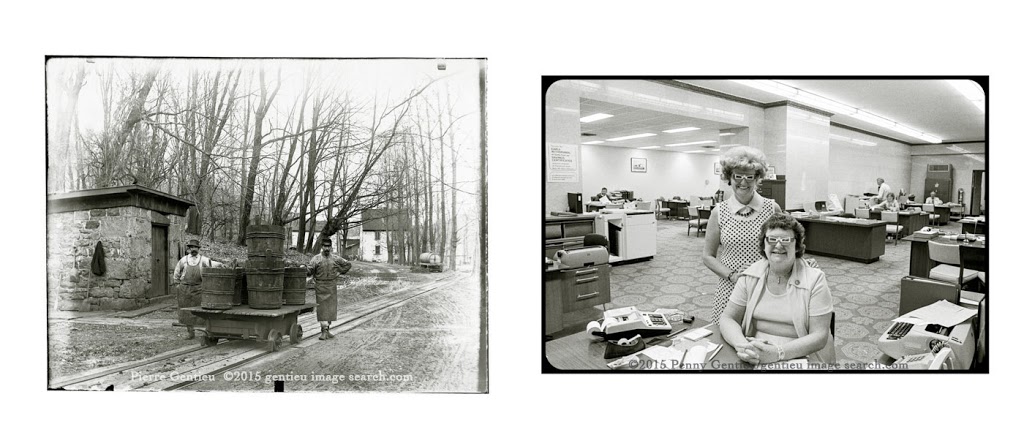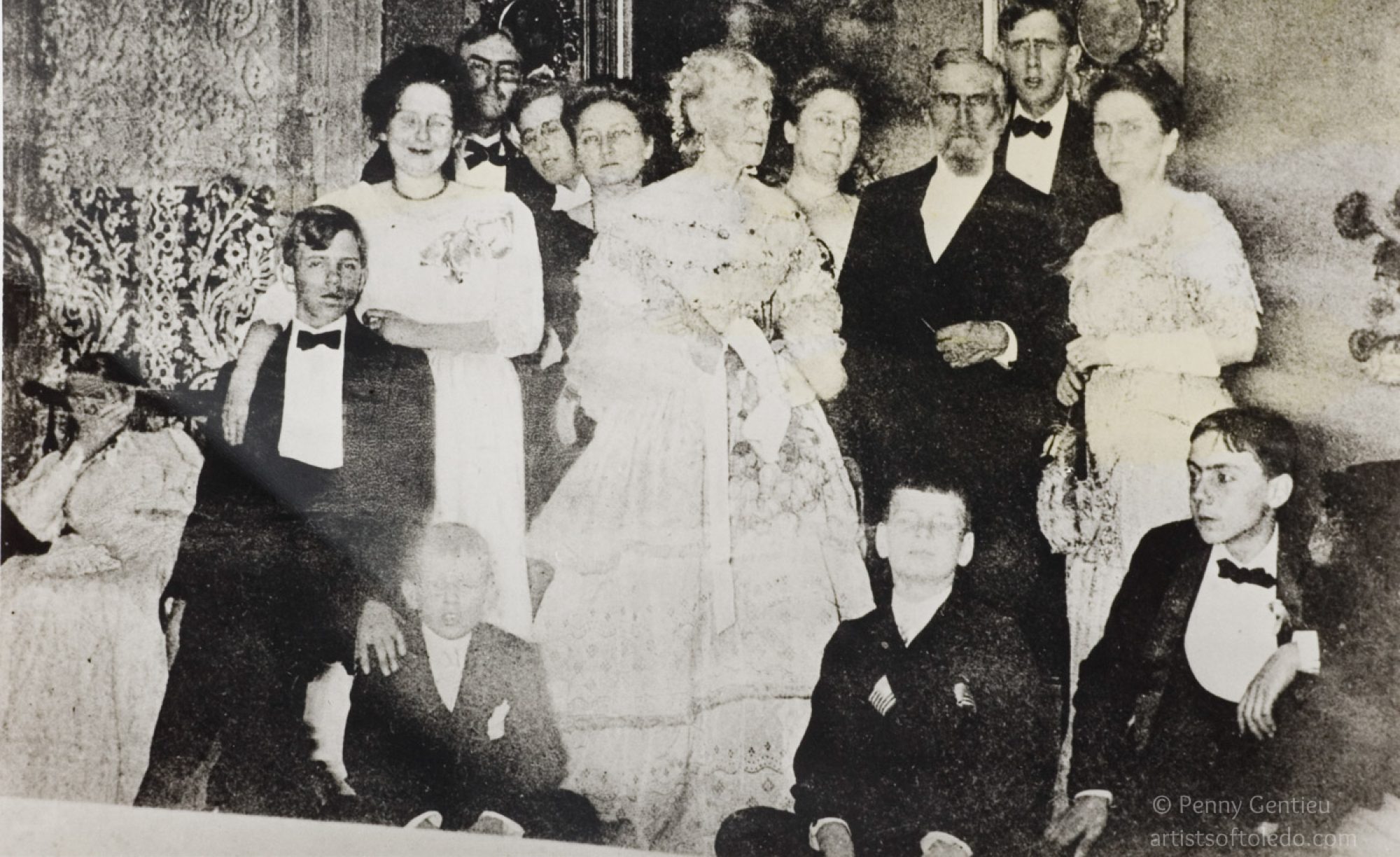
Here’s a comparison of my great great grandfather Pierre Gentieu’s photographs to my own. There was always something mysterious to me, in regard to my initial attraction to photography, which hit me like a brick during my last year in college. And then it all made sense, half-way into my career, when I discovered that my ancestor was a photographer.
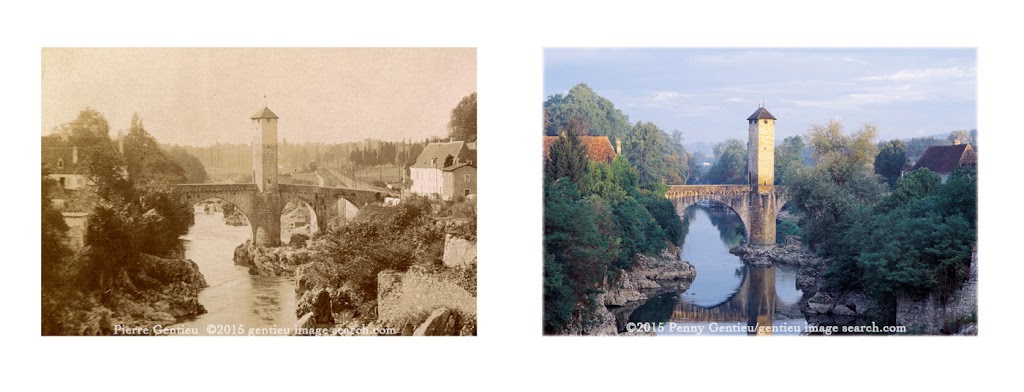
This is the bridge at Orthez, Lower Pyrenees, France, our ancestral town. These photos were taken at what appears to be the same exact same spot, 100 years apart. I didn’t see Pierre’s photo until after I had shot mine. When I photographed the bridge, the morning after arriving in Orthez, I remember walking down a dirt path to some rocks along the river, thinking it was so remote. But I had just stumbled upon this well-worn spot.
The bridge itself was built in the 1300’s by the viscount of Bearn. It led to the 16th Century castle of King Henry IV. Across from the castle ruins was Pierre’s family’s ancient homestead. He came from a long line of chocolatiers.
In the far background to the right of the bridge tower is a Catholic cemetery with a Protestant section. The bridge itself has been crossed back and forth for centuries by conquering Huguenots then Catholics then Huguenots again.
From this history came the town motto, Toquoy Si Gaouses, meaning Touch it if you dare. It’s the origin of the Gentieu family motto brought to America by Pierre.
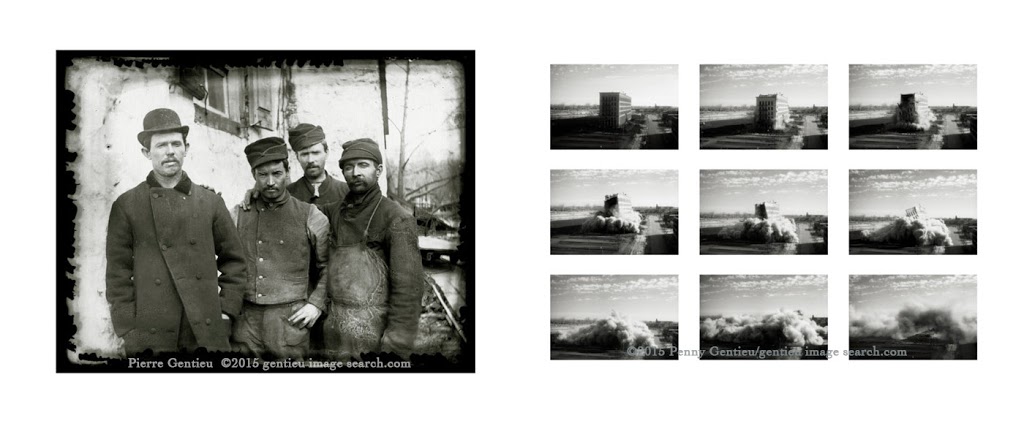
Pierre’s Four Powder Workmen, captured on a wet-plate negative, about 1880. I think it’s ironic that my great great grandfather worked at the DuPont Powder Co. where they made explosives, and I shot this sequence of the 1979 implosion of the Jeep Administration Building. Tonally they work together. The wispy clouds and the shapes made by the dust relate to the deterioration that happened over time around the edges of the powdermen.
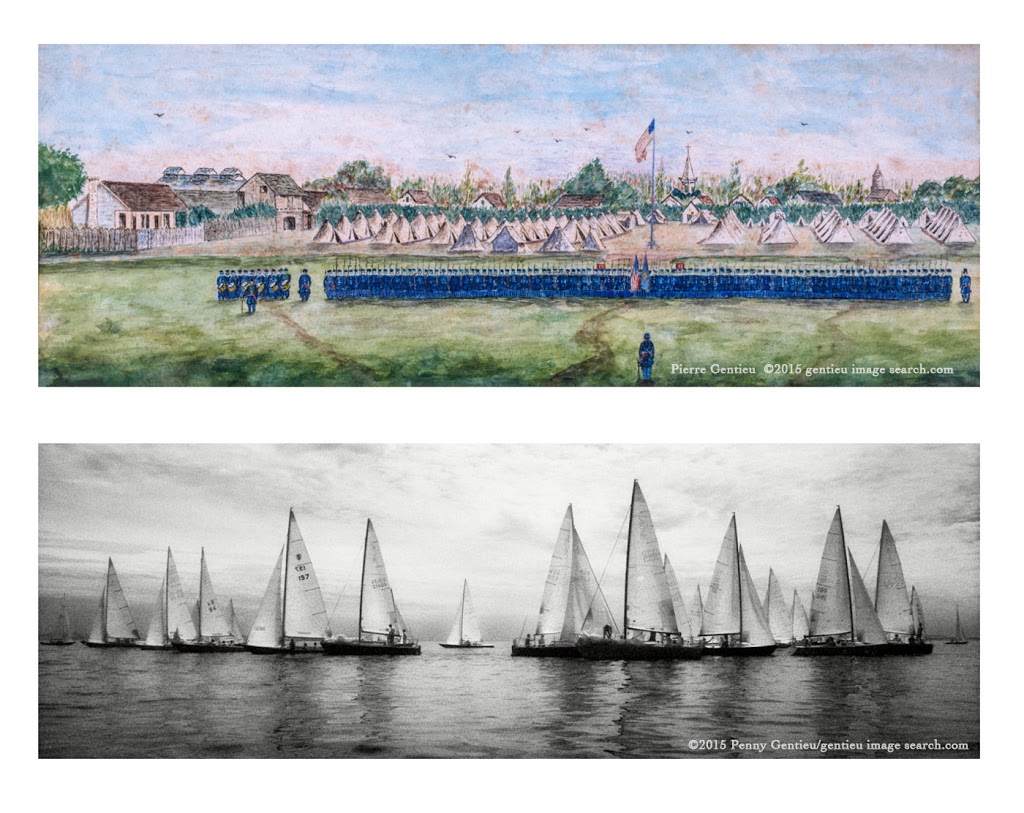
Pierre painted this scene in 1862, of the 13th Connecticut Regiment, at Camp Hubbard, Thibodeaux, Louisiana. The Sibley tents (unusual for the army) look like the sailboats in my photo, waiting for the regatta to start. The man stepped forward, like the man separated between the drummers and the regiment looks like the lone small sailboat in my photo, struck by a ray of sunlight.
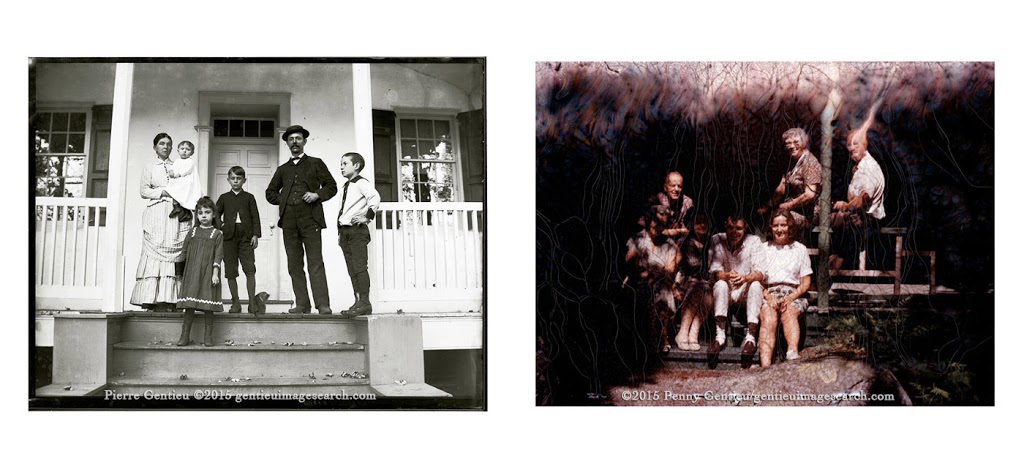
Pierre’s photo of the family of William Green, who was a foreman at the DuPont Powder Co. They are posing on their front porch, all dressed up, it was probably Sunday. My photo (well, mine because I took it, not “took it, took it,” but literally we took it) I think is probably of the actual anonymous family, the subjects of all the photos in the big box of damaged slides from the 1950’s, discarded on a Greenwich Village sidewalk in the 1980’s and rescued by us, used in the series we called, Confabulations. And through this anonymous family, I found my own family, and Pierre’s photos and family treasures.
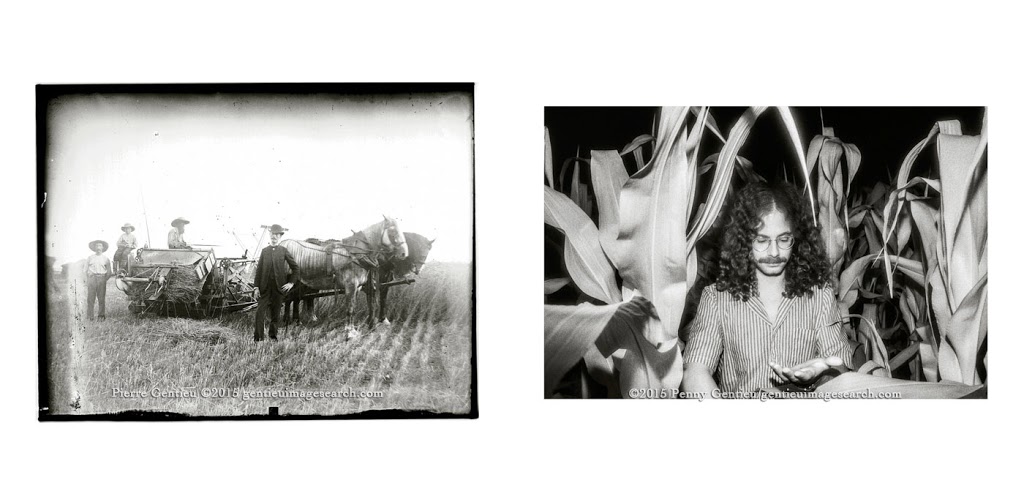
Mr. Hetherton and men in the field with Binding machine, DuPont farm. They are looking out at us from the 19th century. Mine is a youthful portrait of a truly great person who is and has been and still will be making an impact on the world, Adam Weinberg, Director of the Whitney Museum of American Art, in the cornfield in 1979, very connected with nature. He’s looking down at his hand, maybe at a bug, but maybe he’s seeing into the 21st century.